

Executive Summary
The COVID-19 pandemic poses an enormous risk to the health and safety of learners, teachers, parents, school administrators, education practitioners, and the wider community. More than 1.5 billion children and young people globally have been affected by school closure. In Nigeria, the COVID-19 pandemic closure has deprived over 80 million learners access to quality education. However, the early closure of schools has safeguarded more lives of learners, teachers, education personnel and the wider community.
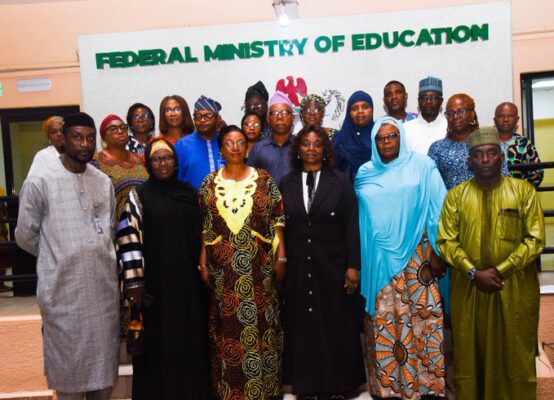
This document has been developed as a collaborative initiative of the Federal Ministry of Education, Education in Emergencies Working Group Nigeria (EEWGN), Presidential Task Force on COVID-19, Federal Ministry of Health, Nigeria Centre for Disease Control (NCDC), UNICEF, Save the Children International, Plan International, Street Child, Terre des Hommes, international development partners, donors, civil society members, education administrators, teachers’ unions, parents, and community representatives across Nigeria.
The main purpose of these guidelines for the safe reopening of schools and learning facilities is to support government and relevant stakeholders to ensure safe reopening of schools, restore pre-pandemic capacities, and institutionalize good safe school practices for the transformation of the education sector in the long term. Additional guidance will be issued for Early Childhood Care and Development (ECCDE), schools with boarding/accommodation facilities, special needs, and on the use of educational facilities as shelters, treatment units and markets.
These guidelines are intended to address safe school reopening across the country while sustaining the gains of early school closure. There is no single established system for reopening schools and learning facilities in the era of the COVID-19 pandemic. However, this document provides a framework not only to ensure that schools meet a high compliance level before reopening but to ensure that we build back better resilience against future disasters and emergencies.
It is desirous that all private and public schools adhere to the control measures highlighted in this document on how to operate within this new context for the protection of learners, teachers, education personnel and their families. As COVID-19 response in Nigeria currently remains fluid, it is essential to note that these measures are subject to change according to updated guidance and new information regarding public health from the NCDC.
The Guidelines for Schools and Learning Facilities Reopening after COVID-19 Pandemic Closures covers four thematic areas:
1. Staying home and learning safely
2. Before schools and learning facilities reopen
3. Reopening Process
4. Conditions of safety when learning facilities are reopened
In each of these thematic areas, actions and responsibilities are identified for various stakeholders such as policy, financing, safe operations, learning, training, reaching the most marginalized, building back better, safety and hygiene, Infection, Prevention and Control (IPC).