


Department Overview
The former Safe Schools Unit, under the Office of the Permanent Secretary, was elevated to the Schools Safety Department in March 2026, in recognition that the scale, intensity and multi-sectoral nature of current risks had outgrown the capacity of a unit-level structure. The Head of the Civil Service of the Federation approved the establishment of the Department, domiciled in the Federal Ministry of Education, to provide strategic leadership, inter-agency coordination, policy direction and nationwide oversight of school safety and protection.
The Department serves as the national coordinating authority for the development, implementation, monitoring and enforcement of school safety, security and protection policies and standards across all educational institutions in Nigeria, spanning early childhood care and development education through basic, secondary, tertiary and non-formal settings. It provides a platform for systematic collaboration with security agencies, emergency services, humanitarian and development partners, and sub-national governments, responding to a wide range of risks including terrorist attacks, abductions, armed banditry, community conflicts, natural disasters, environmental degradation, public health emergencies and bullying, in line with Sustainable Development Goal 4 on quality, inclusive and safe education.
Our Vision
To set a benchmark for excellence in school safety, fostering an environment where learning thrives in a culture of security, resilience and wellbeing for all members of the school community.
Our Mission
To promote and coordinate the development of innovative, proactive and sustainable safety strategies that protect students, staff and educational infrastructure from attack, and to advance policy implementation, stakeholder collaboration, capacity building and monitoring systems to ensure violence-free and resilient learning spaces nationwide.
Mandate
The Department’s mandate covers all levels of education, including early childhood care and development education, and basic, secondary, tertiary and non-formal education settings. It includes:
- Establishing a national framework for safe, secure and environmentally friendly learning environments
- Coordinating and supervising the implementation of safety policies and protocols
- Enhancing physical security
- Serving as the focal point for multi-sectoral collaboration
- Driving research, digital management and innovation for evidence-based planning
- Mainstreaming safety into educational governance and development planning
- Promoting the domestication of international safety and environmental protocols
- Providing policy advisory support and strategic recommendations
- Building institutional and community capacity for school safety
- Advancing Nigeria’s global commitment to protect education from attack and environmental risks
The Department also collaborates with State Ministries of Education, security agencies and development partners to support decentralised implementation of school safety nationwide.
Core Functions
- Serves as the focal point for multi-sectoral collaboration on safety in schools, coordinating with security agencies, emergency services, and development partners (Mandate).
- Drives digital management and information systems to support evidence-based planning, including real-time incident reporting (Mandate/Core Functions).
- Addresses violence against children in schools, in line with the Safe Schools Common Approach and the National Policy on Safety, Security and Violence-Free Schools (Minimum Standards for Safe Schools, 2021).
Leadership
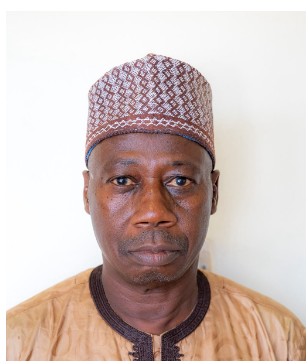
DIRECTOR
Mal. Umar Muhammad Naseer
Mal. Umar Muhammad Naseer is the current Director Schools Safety Department. He was born in Katsina Local Government Area of Katsina State on 4th April, 1964 into a Hausa Muslim family.
He was enrolled for the mandatory National Youth Service in 1990. after which hejoined the Federal Ministry of Education on 14 th May,1991 as Education Officer II on Grade Level 08. He rose through the ranks to the present position as Director of Education on Grade Level 17.
Organizational Structure
Divisions: Coordination, Digital Safety And Child Protection
Branches:
- Coordination,
- Digital safety,
- Child Protection.
Key Functions:
- Serves as the focal point for multi-sectoral collaboration on safety in schools, coordinating with security agencies, emergency services, and development partners (Mandate).
- Drives digital management and information systems to support evidence-based planning, including real-time incident reporting (Mandate/Core Functions).
- Addresses violence against children in schools, in line with the Safe Schools Common Approach and the National Policy on Safety, Security and Violence-Free Schools (Minimum Standards for Safe Schools, 2021).
Divisions: Risk Management, Emergency Response and School Safety Infrastructure.
Branches:
- Risk Management,
- Emergency Response,
- school safety infrastructure
Key Functions:
- Enhances physical security and establishes a national framework for safe, secure and environmentally friendly learning environments.
- Coordinates and supervises the implementation of safety policies and protocols.
- Addresses natural hazards, conflict, everyday hazards and safe school infrastructure, in line with the Safe Schools Common Approach.
Key Services
- Administration of the National Safe Schools Questionnaire for institutional safety self-assessment and external certification
- Violence reporting, referral and tracking, through standardised response forms
- External tracking of cases of violence against children in schools
- Coordination of school attack response and documentation
- Natural hazards emergency preparedness and response planning
- Everyday hazards risk assessment for schools and learning centres
- Certification of schools and learning centres as safe for educational pursuits
Key Programmes / Projects
- National Policy on Safety, Security and Violence-Free Schools (NPSSVFS), and its Implementation Guidelines
- Minimum Standards for Safe Schools, certification benchmarks and tools for schools and learning centres nationwide
- Safe Schools Common Approach (SSCA), the department’s framework addressing violence against children, natural hazards, conflict, everyday hazards, and safe school infrastructure
Achievements
The Schools Safety Department carries forward a programme of work that includes the 2020 development of the National Policy on Safety, Security and Violence-Free Schools and its Implementation Guidelines, and the development of the Minimum Standards for Safe Schools, achievements of the former Safe Schools Unit that now form the Department’s operating foundation
Images & Media


Contact Information
Main Office: Federal Ministry of Education, Federal Secretariat, Shehu Shagari Way, Abuja, Nigeria. P.M.B 146, Garki
- Email: schools.safety@education.gov.ng