

For more than a decade, Nigeria has witnessed a series of attacks on education, leading to the closure of many schools and the disruption of learning activities. Insecurity continues to reduce children’s probability of starting school or returning to the classroom. Available records in 2020-2021 show that in the north-west, 25 educational institutions were attacked and 1,470 learners abducted along with 24 education personnel (SBM Intelligence, 2021). In the north east also 51 schools experienced armed attacks, and 64 schools were targeted by suicide bombing (JENA, 2021). In 2021, 11,500 schools in the country were closed due to fear of attacks. The frequency of these attacks in 2020 disrupted the education of more than five million children. In 2021, about 618 secondary (boarding) schools, mostly in Sokoto, Zamfara, Adamawa, Kano, Katsina, Niger and Yobe States were also closed. An estimated one million children did not start the 2021-2022 academic year due to insecurity (UNICEF, 2021).
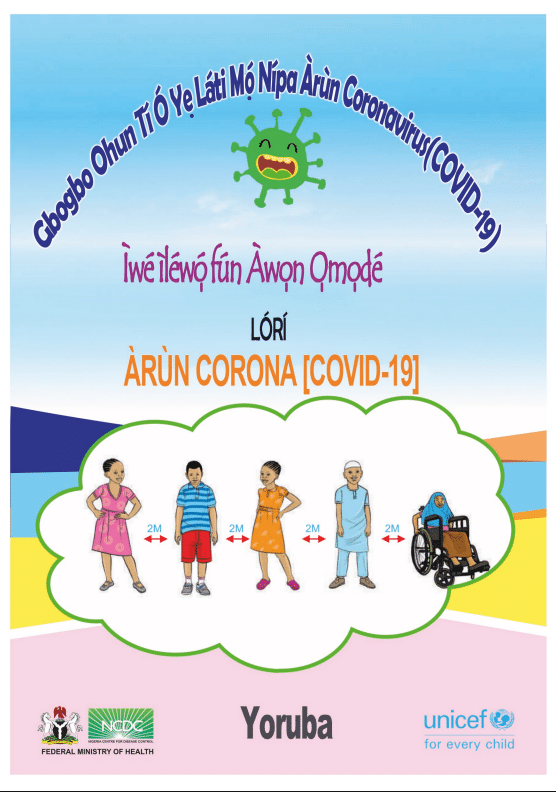
In March 2020, schools at all levels in Nigeria were closed for six months to curtail the spread of COVID-19. The school closure affected approximately 37 million learners from pre- primary to tertiary. As part of the COVID-19 education response, the Federal Ministry of Education, Federal Ministry of Health and the Nigeria Centre for Disease Control (NCDC) released the Guidelines for Schools and Learning Facilities after COVID-19 Pandemic Closures to address safe reopening. The COVID-19 lockdown measures reduced children ’s school attendance across the country. In addition, the measures exacerbated children’s vulnerability to harmful cultural practices such as child marriage, gender inequality and child labour (World Bank, 2021). For example, girls had additional caretaking duties in comparison to boys therefore making it more difficult to continue distance learning (UN Women, 2020).
One of the actions by the Nigerian government in the effort to safeguard education is the endorsement of the Safe Schools Declaration in 2015. President Muhammadu Buhari, in December 2019, signed the SSD Ratification Document signalling Nigeria’s commitment to uphold the principles of the SSD. The National Policy on Safety, Security and Violence-Free Schools was approved in August 2021. In addition, Minimum Standards for Safe Schools and the SSD Manual for Security Agencies and Human Rights Institutions have also been developed to support the implementation of the SSD.