


Educational Planning, Research and Development
Last updated: 11 September, 2026
By: Adefolalu Adeife
Department Overview
The Department serves as the Ministry’s central planning and research arm, coordinating education sector planning, policy analysis, statistical research, monitoring and evaluation, international collaboration, and strategic development initiatives. It supports informed policy decisions through research, data analysis, institutional planning, and programme evaluation.
The Department evolved from the Planning, Research and Statistics (PRS) Department, later restructured as the Policy Planning, Management and Research (PPM&R) Department, and re-designated in 2013 as Educational Planning, Research and Development (EPR&D). It is structured into seven Divisions and twenty-one Branches, and maintains an outstation post at the Office of the Permanent Delegation of Nigeria to UNESCO in Paris, France, headed by Ambassador and Permanent Delegate Dr. (Mrs.) Hajo Sani.
Our Vision
To make Colleges of Education Centres of Excellence in teaching, learning and research in order to promote the production of top-class teachers, highly motivated and fully prepared for teaching at the basic education level
Our Vision
Sustaining reliable Education Management Information System for evidence based policy decision making, planning and management through harnessing of partnerships to facilitate quality education delivery at all levels for comparative advantage globally.
Our Mission
Coordination and Development of Education Policies, Strategic and Medium Term Sector and Action Plans, Research and Documentation and harnessing of Partnerships for efficient and effective education service delivery.
Mandate
- Formulate and coordinate a National Policy on Education
- Collect and collate data for purposes of Educational Planning and Financing
- Prescribe and maintain uniform standard of education throughout the country
- Control and monitor plans, programmes and projects to ensure the quality of education in the country
- Harmonize educational policies and procedures of all the states of the federation through the instrumentality of the National Council on Education (NCE)
- Effect co-operation in educational matters on an international scale
- Develop curricula and syllabuses at the national level
Core Functions
Policy – Facilitates the development of education policies, coordinates the three statutory policy meetings of the education sector (JCCE Reference, JCCE Plenary and National Council on Education), and compiles and warehouses Nigeria’s education policies.
Monitoring – Monitors capital projects and programmes in FME agencies, tertiary institutions and Federal Government Colleges, conducts management audit across departments and parastatals, monitors implementation of NCE decisions and NAEC recommendations nationwide, monitors learning achievement, and monitors curriculum compliance at basic and senior secondary levels.
Education Sector Plans – Coordinates preparation of the 10-Year National Education Sector Strategic Plan and Annual Work Plan, coordinates Medium Term Sector Strategy (MTSS) plans, and runs a Community of Practice with state Directors of Planning, Research and Development.
Data – Collects, publishes and disseminates education statistical data across the 36 states and FCT, conducts the Annual School Census for quality checks and school mapping, and creates a database for warehousing policies.
System Strengthening – Coordinates reportage of Ministerial Delivery to the Central Delivery and Coordination Unit, serves as advisory and liaison for NATCOM-UNESCO and NATCOM-ICESCO activities, coordinates SDG4 activities, coordinates the Ministerial Annual Merit Award, and coordinates stakeholder and citizens’ engagement.
Publications – Produces the UNESCO Annual Global Monitoring Report Card and publishes education statistical data, the FME News Bulletin, and Education Today.
Leadership
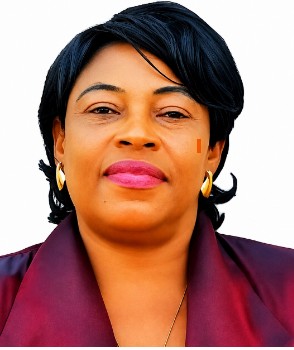
DIRECTOR
Mrs. Anigbogu, Obianuju Joannes
Mrs. Obianuju Joannes Anigbogu is a native of Ozubulu town in Ekwusigo Local
Government Area of Anambra State. With a strong academic background, Obianuju
holds a Bachelor’s Degree in Education with focus on Mathematics. She was employed
by the Federal Civil Service Commission (FCSC) and deployed to the Federal Ministry of
Education in April, 1994 as Education Officer II (GL 08), to teach Mathematics at
Federal Government College (FGC) Enugu. At FGC Enugu, as a dynamic and futuristic
young officer that had penchant for lifelong learning and spatial awareness of socio-
economic events within Nigeria and abroad, she exhibited the gravitas, patience and
conscientiousness needed in the inculcation of mathematical skills to the young
Nigerians over many years, thus making enormous contribution in preparing the young
with the skill sets to face the challenges of the 21 st century.
Incrementally, she developed student friendly pedagogical practices during her years in
FGC Enugu to make learning of mathematics a palatable and memorable experience
and also championed the vanguard for the propagation of these practices at the college.
This pedagogical achievement is because of her unalloyed conviction that education is
the preparation of children to assume their adult roles in the modern and enlightened
society as loving parents, as engaged citizens, as meaningful contributors to society and
their communities and as productive workers that contribute in increasing the socio-
economic pie of the society.
Throughout her career, Obianuju has implemented data-driven approaches to enhance
curriculum delivery and improve student outcomes. She has been instrumental in
combating examination malpractice at basic and post-basic levels. She has coordinated
Nigeria’s educational bilateral relations with other countries, participating in national and
international forums to negotiate MoUs and ensure Nigeria’s alignment with global
educational standards.
She rose progressively in her public service career that culminated in her promotion to
the position of Director Education in January, 2022. With a Master’s Degree in
Educational Administration and Planning, providing her with advanced skills in strategic
planning, policy development and school administration, she was subsequently
appointed as the Director, Educational Planning, Research and Development
Department in the Ministry to lead efforts in policy formulation, research and the
development of strategic and medium-term plans for the education sector.
With a clear mission to enhance outcomes across all levels of education in Nigeria, her
mission is complemented by a forward-looking vision of sustaining a dynamic and
resilient Department— one driven by continuous improvement, rigorous research, open
intellectual engagement and empirical validation of policies.
Her strong academic foundation and career trajectory, spanning education,
mathematics, administration and computer operations demonstrate her steady growth
from a classroom teacher to a strategic policy leader. This progression is marked by
decades of hands-on experience in teaching, curriculum development, policy
formulation and high-level educational planning within the Federal Ministry of
Education.
In her current role, as Director of Educational Planning, Research and Development, her
responsibilities revolve around shaping long-term strategies, overseeing project
implementation, managing budgets, and ensuring alignment of educational initiatives
with national priorities. Obianuju is responsible for developing strategic initiatives to
improve the efficiency and effectiveness of educational programs. She oversees the
monitoring and evaluation of educational programmes and projects, ensuring they meet
national and international standards and uses data to inform strategic decisions. Her
leadership is crucial in steering research and development initiatives that contribute to
continuous improvement in the sector. She is equally leading the Peace Education
Initiative as adopted by Nigeria to ensure its implementation.
Recognized for her analytical skills and strategic vision, Obianuju is dedicated to
advancing educational initiatives that make a tangible impact, particularly in achieving
SDG4, which aims for inclusive, equitable, quality education. The role also involves
fostering collaboration among stakeholders, guiding curriculum reforms, developing
assessment frameworks, strengthening data systems and monitoring progress towards
achieving SDG4. Central to these is the ability to translate research into actionable
policies that respond to emerging educational challenges.
Beyond her professional responsibilities, her service to the Federal Government has
been extensive and impactful, with active participation in numerous high-level
committees, policy review bodies, national initiatives and taking leadership roles in key
educational reforms and policies. She is passionate about mentoring aspiring educators
and staying updated on the latest trends in educational technology. With over 30 years
of experience, she has held various positions, served on multiple committees, and
participated in numerous professional development programs both nationally and
internationally. Her dedication to excellence in education is reflected in her numerous
awards and recognition as an astute educator.
In view of her substantial awareness of the Ministry’s accomplishments, her strong
competencies in strategic planning, stakeholder coordination, project monitoring, policy
execution, she is spearheading a positive departure in educational planning, research
and development that will crystalized into production of educated Nigerians that are fit
for the 21 st century challenges in fulfillment of the yearnings and aspirations of African
Head of States at 2024 African Union General Assembly, which also dovetailed into
President Tinubu’s Renewed Hope Agenda on Education.
Her goal to address critical issues such as examination integrity, gender-responsive
planning and digital safety for learners and her ability to manage complex
processes—such as Federal Executive Council memoranda, national data
systems—demonstrates a high level of institutional effectiveness which positions her as
both a practitioner and a leader in education reform.
Overall, her profile presents a dedicated and accomplished education strategist whose
work continues to shape policies, strengthen systems and improve educational
outcomes in Nigeria.
Organizational Structure
Divisions: Educational Planning
Branches:
- Strategic Planning and Medium Term Sector Strategy (MTSS)
- Planning, Monitoring and Evaluation and Management Audit (PME & MA)
Key Functions:
- Monitors FEC-approved projects for FME HQs, parastatals, tertiary institutions and Federal Unity Colleges;
- prepares the Medium-Term Sector Strategy and related plans; coordinates the Ministry’s Operational Plan;
- coordinates project planning and budgeting;
- supports states in developing State Education Plans;
- coordinates the 10-Year National Education Sector Strategic Plan (NESSP);
- monitors and evaluates plan implementation; conducts management audit of the Ministry and its parastatals;
- collaborates with international development partners on planning, monitoring and evaluation.
Divisions: Policy Coordination and Monitoring
Branches:
Joint Consultative Committee on Education (JCCE)
National Council on Education (NCE)
Key Functions:
- Coordinates policy development and review;
- serves as secretariat to the three yearly statutory meetings (JCCE Reference, JCCE Plenary, NCE);
- coordinates the nine Reference Committees (Basic, Senior Secondary, Adult and Non-Formal, Teacher, Special, Technology & Science, Quality Assurance, Tertiary Education, Educational Planning);
- harmonises memoranda for NCE meetings;
- monitors compliance with NCE decisions;
- compiles Summaries of NCE Decisions.
Divisions: Research, Policy and Statistics
Branches:
Research and Documentation, Statistics and NEMIS
Policy Development
Key Functions:
- Hosts the Nigeria Education Management Information System (NEMIS), streamlining student/pupil data under a verifiable Unique Identifier;
- coordinates and supervises the Annual School Census; collates and analyses education data from states and FME agencies;
- publishes education statistics and indicators; provides an integrated Business Intelligence platform for national and international reporting; undertakes research for education policy formulation;
- coordinates the Ministerial Annual Merit Award (MAMA) and Presidential Teachers Awards; conducts the Nigeria Annual Education Conference (NAEC).
Divisions: Educational Management
Branches:
- Programme Coordination (SDG4 Secretariat)
- Monitoring of Regulatory Agencies
- Curriculum and Monitoring of Learning Achievement
Key Functions:
- Coordinates SDG4 activities nationwide;
- monitors integration of NEPAD frameworks;
- conducts Early Grade Reading and Early Grade Mathematics Assessments (EGRA/EGMA);
- monitors curriculum compliance and nationwide learning achievement;
- coordinates School Based Management Committee activities with development partners such as UNICEF and UNESCO;
- monitors NERDC and NIEPA.
Divisions: Education Information and Documentation (EID)
Branches:
- Informatics
- READ Campaign
Key Functions:
- Disseminates education information through newsletters, Education Today, the Ministry’s calendar of events, handbook, yearbook and compendium;
- tracks activities of the Honourable Ministers and Permanent Secretary; maintains an event album;
- produces Unity Spotlight; and runs the READ Campaign, an initiative to mobilise a national reading culture, including World Book and Copyright Day, Day of the African Child, International Literacy Day, reading competitions, and Reading Facilitator capacity building workshops.
Divisions: NATCOM-UNESCO
Branches:
Education
Natural Sciences
Social & Human Sciences
Culture Sector
Communication & Information
ICESCO
Key Functions:
- Serves as Nigeria’s National Commission for UNESCO, liaising between UNESCO and Nigerian federal/state ministries and agencies, facilitating Nigeria’s participation in UNESCO meetings and programmes, disseminating information on UNESCO fellowships, prizes and advertised posts, and maintaining a UNESCO Depository and library. Also coordinates NATCOM-ICESCO matters: advisory and liaison support to government on ICESCO engagement, facilitating Nigeria’s participation in ICESCO conferences and programmes, and coordinating Nigeria’s statutory financial contributions to ICESCO.
Divisions: Education 2030
Branches:
- Access
- Quality
- Systems Strengthening
Key Functions:
- Coordinates production of the National Action Plan addressing the Education 2030 Agenda;
- liaises with FME parastatals that are Education 2030 vehicles (UBEC, NMEC, NCNE, NTI, NERDC, NCCE, NBTE, TRCN, NUC);
- coordinates the National Education 2030 Forum;
- monitors implementation of Education Sector Plan targets across the 36 states and FCT;
- produces the Annual Education 2030 Nigeria Report Card;
- participates in UNESCO Flagship meetings including E-9 meetings;
- and solicits partnership with stakeholders such as international development partners, civil society and NGOs.
Key Services
Education Sector Planning Support : assistance to states and Ministry agencies in developing State Education Plans, Medium Term Sector Strategy (MTSS), and the National Education Sector Strategic Plan
Education Statistics and Data Services : the Annual School Census, education data collection and publication, and NEMIS data services
Policy Development and Coordination : secretariat services for JCCE and NCE meetings, and policy documentation
Monitoring and Evaluation Services: monitoring and evaluation of programmes and projects across FME agencies and tertiary institutions
International Education Cooperation : liaison with UNESCO and ICESCO, including dissemination of fellowship and programme information
Publications and Information Dissemination : the FME News Bulletin, Education Today, and statistical reports
Central Coordination Delivery Unit (CDCU) : tracking and reporting on Presidential Priority Deliverables
COSCEN Secretariat: coordination platform for State Commissioners of Education
Key Programmes / Projects
- Central Coordination Delivery Unit (CDCU) :
- coordinates implementation of Presidential Priority Policies, Programmes and Projects across the Ministry, parastatals, tertiary institutions and Federal Government Colleges; receives and analyses agency reports;
- submits quarterly progress reports to the Federal Executive Council. The Ministry currently reports on 11 High Impact Deliverables and 59 indicators under this unit.
- Quarterly Engagement of the HME, HMSE and PSE with Heads of Departments/Units and Chief Executives of Parastatals/Agencies :a structured quarterly platform chaired by the Honourable Minister of Education, presenting a scorecard of progress against targets.
- COSCEN Secretariat : administrative and coordinating hub for the Committee of States’ Commissioners of Education in Nigeria (COSCEN), bringing together Education Commissioners from the 36 states and FCT to promote policy coherence and coordinated education reform, in collaboration with the Nigeria Governors’ Forum.
Achievements
- Nationwide Monitoring Exercise on Curriculum Compliance
- Early Grade Reading and Early Grade Mathematics Assessments
- Programme for the Analysis of Education Systems (PASEC)
- National Learning Assessment (NLA)
- Quarterly Citizens’ and Stakeholders’ Engagement Sessions
- Launch of the National Policy on Anti-Bullying in Nigerian Schools and its Implementation Guidelines
- 2025 Joint Consultative Committee on Education (JCCE) Reference Committees Meeting
- 84th JCCE Plenary Meeting
- 69th National Council on Education (NCE) Meeting
- Quarterly Engagement of the Honourable Minister of Education, Honourable Minister of State for Education, and the Permanent Secretary for Education with Directors and Chief Executives of Parastatals and Agencies
- Training on Annual School Census (ASC) and School Mapping
- Trial Test of Digitized School Safety Incident Data Collection Instrument
- Implementation of the Performance Management System
- UNESCO Programme and Budget Engagement and 43rd UNESCO General Conference
- ICESCO Activities
Images & Media


Contact Information
Main Office: Education Planning Research and Devlopment Department, Federal Ministry of Education, Federal Secretariat, Shehu Shagari Way Abuja, Nigeria P.M.B 146, Garki
- Email: dbasic@education.gov.ng
- Phone: