

Department Overview
The Ministry, with approval from the Office of the Head of the Civil Service of the Federation, unbundled a number of departments including the Basic and Secondary Education Department. The Senior Secondary Education Department was unbundled in July 2021, with the reform aimed at ensuring ease of administration and operational efficiency.
The Senior Secondary Education Department is a core policy and coordination department within the Federal Ministry of Education, responsible for the administration, regulation and quality assurance of senior secondary education in Nigeria. It focuses on ensuring that senior secondary education, from SS1 to SS3, delivers relevant academic, vocational and life-preparatory competencies aligned with national development goals and international best practice.
The Department operates within the broader Federal Ministry mandate to regulate secondary education nationwide and ensure uniform standards across states, and oversees the affairs of Senior Secondary Education, Federal Unity Schools, and Special Education and Language Projects.
Our Vision
To provide universal and equal access to quality secondary education that will ensure self-reliance, preparedness for further education, good citizenship and effective participation in democratic governance.
Our Mission
To provide the enabling structures and build capacity for efficient and effective implementation, monitoring and evaluation of the National Policy on Education in the secondary sub-sector.
Mandate
- Initiate and formulate policies for Senior Secondary Education
- Set standards and provide operational guidelines for the establishment of secondary schools, in collaboration with FEQAS
- Ensure teacher quality
- Monitor curriculum delivery in senior secondary schools
- Oversee the management of the 83 Federal Unity Colleges
- Monitor and supervise the conduct of the National Common Entrance Examination in collaboration with NECO
- Collaborate with the states and the Federal Capital Territory to ensure uniformity and standardisation in the conduct of SSCE examinations nationwide
- Work with states, non-governmental organisations and international development partners on issues concerning gender education
- Promote multilingual education in both foreign and Nigerian languages
- Coordinate the Nigerian French Language Project
- Formulate, coordinate, supervise and implement all policies and programmes targeted at the education of children with special needs
- Exercise oversight functions on Ministry parastatals such as NSSEC, and examination bodies including WAEC, NECO, NABTEB and the National Board for Arabic and Islamic Studies
- Maintain and run a Language Clinic for the teaching and learning of foreign languages, including French and Chinese, and Nigerian languages, including Hausa, Yoruba and Igbo.
Core Functions
- Monitoring curriculum delivery in senior secondary schools
- Overseeing the management of the 83 Federal Unity Colleges (FUCs), such as FGCs, FGGCs and FSCs
- Monitoring and supervision of the conduct of the National Common Entrance Examination (NCEE) in collaboration with NECO
- Collaborating with the states and the FCT to ensure uniformity and standardisation in the conduct of SSCE examinations nationwide
- Working with states, NGOs and international development partners on issues concerning gender education
- Promoting multilingual education in foreign and Nigerian languages
- Coordinating the Nigerian French Language Project (NFLP)
- Maintaining and running a Language Clinic for the teaching and learning of foreign and Nigerian languages.
Leadership
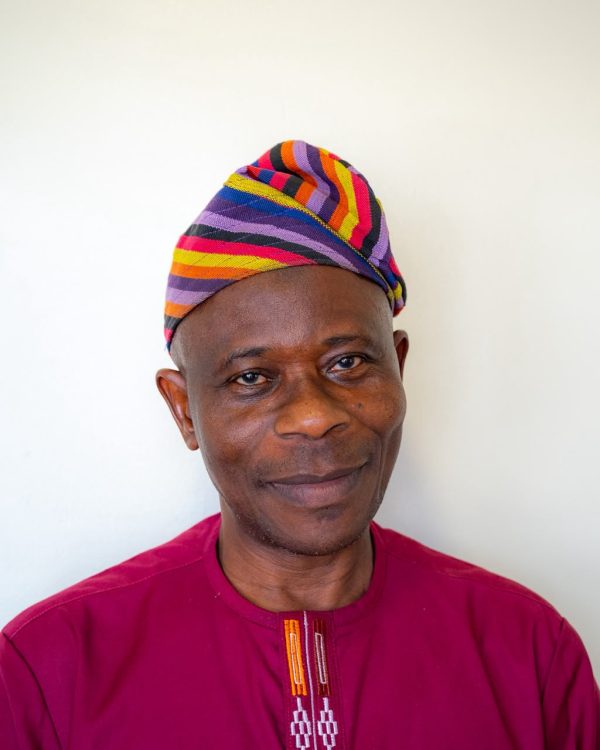
DIRECTOR
Adeniji Ibrahim Adesoji
Mr. Adeniji Ibrahim A. is a seasoned administrator, renowned educator, and disciplined professional with over thirty years of exemplary service in the Federal Civil Service.
He began his teaching career as an Education Officer I in 1995 and, through dedication, hard work, and outstanding performance, rose through the ranks to the position of Director.
Mr. Adeniji holds a Master of Technology (M.Tech.) degree in Management Science, reflecting his commitment to professional development and excellence in educational administration.
Director's Additional Profile Information:
- Professional Memberships: Institute of Corporate Administration of Nigeria, Counselling Association of Nigeria
- Honors: Ambassador for Peace, Universal Peace Federation; Lolo Ifeadikanwanne of Nanka Town
- Core Competencies: Policy formulation, strategic leadership, stakeholder engagement, quality assurance
Organizational Structure
Divisions: Secondary Education
Branches:
- State Secondary School
- Private Secondary
- Public Secondary School
- Documentation and School Records
Key Functions:
- Collaborates with the organisers of the President’s School Debate Nigeria (PSDN) and similar groups
- Maintains documentation and school records for state and private schools
- Collaborates with states on issues concerning secondary schools
- Works with states to ensure the quality of infrastructural facilities in state and private secondary schools
- Conducts on-the-spot assessment of student progress in state and private secondary schools
- Liaises with professional associations, including NUT, ANCOPSS, NAPTAN, NAPPS and APSON
- Handles matters concerning WAEC and NECO, monitoring the quality of student performance in both examinations
- Periodically updates the register of private secondary schools in collaboration with state Ministries of Education
- Operationalises the Anti-Bullying Policy across educational institutions
- Develops and distributes implementation guidelines and training materials on anti-bullying
- Provides technical support to schools and education officials on anti-bullying matters.
Divisions: Unity Schools
Branches:
- North Central Zone
- North East Zone
- North West Zone
- South East Zone
- South West Zone
- South South Zone
Key Functions:
MANDATE
Generate the policy framework and supervise the implementation of policies for the provision of qualitative secondary education in Federal Unity Colleges
Develop and implement policy guidelines on secondary education with respect to Federal Unity Colleges
Supervise the 83 conventional Federal Unity Colleges, which serve as vehicles for national unity and models for state and private secondary schools
Disseminate information on secondary education to Federal Unity Colleges
Monitor the implementation of educational policies in the Federal Unity Colleges.
Functions/ Activities
- Collects and collates data from the Colleges
- Disseminates information to the Colleges
- Organises the Principals’ Annual Conference and other ad-hoc meetings
- Facilitates the admission process to Federal Unity Colleges
- Handles correspondence from the public and other stakeholders on matters concerning Federal Unity Colleges
- Liaises with HRM on appointment, promotion, posting, staff welfare and facilities in the Colleges
- Attends School-Based Management Committee (SBMC) meetings alongside other FME representatives
- Monitors student academic performance in WAEC and NECO examinations
- Attends Parent Teacher Association general meetings and elections to ensure rules and procedures are followed
- Handles matters from agencies and parastatals such as WAEC and NECO as they affect Federal Unity Colleges
- Participates in Speech and Prize-Giving Day, Founders’ Day, Inter-House Sports, FEDCOL Games and other College activities, when directed.
Divisions: Special Educatin And Language Project
Branches:
- Gender Education Branch
- Special Needs Education and Services Branch.
- Language Project
- Nigeria/Arabic Languages
- Foreign Languages
Key Functions:
Formulates and develops policies on gender, adult and non-formal, and special needs education
Coordinates gender education, adult and non-formal education, and special needs education activities across the states
Liaises with parastatals, agencies, international development partners and civil society groups on inclusive education, gender, adult and non-formal, and special needs education policy
Directs specific projects initiated and implemented by FME in relation to the Division’s mandate
Coordinates advocacy and sensitisation visits to states on girl-child and boy-child education, special needs and inclusive education, and adult and non-formal education
Gender Education Branch: formulates and implements gender education policy, addresses gender parity imbalances in education delivery, coordinates monitoring and evaluation of gender education issues, and coordinates gender mainstreaming and budgeting in the education sector, including through the Girls Education Project (GEP).
Special Needs Education and Services Branch : formulates policy for the education of children and youth living with disabilities, coordinates special needs education and inclusive education practices nationwide, collects data on persons with special needs, liaises with NERDC on inclusive curriculum, and liaises with the Federal Scholarship Board on scholarships for special needs persons in tertiary institutions and Unity Colleges.
Key Services
- Evaluate internal control system
- Ensure compliance to rules, procedures and regulations.
- Evaluate organizational efficiency and effectiveness
- Ensure that audit findings and recommendations and value to the organization and provide an independent opinion on effectiveness, efficiency and economic goal achieved.
Key Programmes / Projects
Annual General Meeting for Principals of Federal Unity Colleges
Review of School Based Management Committee Guidelines
Advocacy and sensitisation on enrolment of candidates into JSS 1 of Federal Unity Colleges, carried out in eight Northern States
Monitoring of the National Common Entrance Examination
Review of PTA Guidelines
Needs assessment of the 16 integrated Federal Unity Colleges involved in the implementation of inclusive education and the provision of assistive devices
Retooling of regular classroom teachers on the utilisation of special needs materials
Marking of the Global International Day of Persons with Disabilities in schools
Establishing and equipping Language Clinics in Federal Unity Colleges
Celebration of International Mother Language Day
Retooling of Gender Desk Officers in the geo-political zones
Celebration of the International Day of the Girl Child
Supervision of the Adolescent Girls’ Initiative for Learning and Empowerment, a World Bank project
Achievements
- Establishment of new Federal Science and Technical Colleges in collaboration with the Technology and Science Education Department
- Conduct of interviews and appointment of Principals for Federal Unity Colleges, in collaboration with the Human Resource Management Department
- Conduct of the National Common Entrance Examination in collaboration with NECO
- Annual selection exercise for candidates into the Federal Unity Colleges
- Sensitisation exercise to boost enrolment into Federal Unity Colleges in collaboration with NECO, with stations previously recording few candidates increasing their numbers
- Retreat for Ministry representatives on the School Based Management Committee
- Collaboration with states in monitoring the activities of private secondary schools in the South South, South West and North Central geo-political zones
- Establishment of Mothers’ Associations in schools for indigent mothers
- Capacity building and skills training for Mothers’ Associations
- Development of a National Policy on Albinism
- Development of a National Policy on Gender Education
- Sustainability of the Gender Education Project in some Northern States
- Advocacy and sensitisation of policy makers for increased enrolment, retention and transition to higher education of the girl child
- Institutionalisation of Students Mentoring and Counselling and securing state buy-in to the programme
- Generation of revenue for Government through the siting of a telecommunications mast in a College
- Development of a National Policy on Inclusive Education
- Development, in collaboration with the Ministry of Justice, of a Standard Operating Procedure for the prosecution of perpetrators of school-related gender-based violence in Nigeria
- Transfer of 2,400 children of internally displaced persons from Adamawa, Borno and Yobe States to 43 Federal Unity Colleges to continue their secondary education on full scholarship
- Monitoring and provision of counselling and psychosocial support to internally displaced persons in their schools
- Conduct of debate competitions for students in collaboration with the President’s Schools Debate Nigeria and other organisations
- Compilation of the register of approved private secondary schools in Nigeria
Frequently Asked Questions (FAQs)
Q1: Population of students and class population
A: Population of students in class per arm = 40 students per class
Q2: Teacher population and disposition
A: Inadequate number of teachers
Q3: State of infrastructures in the Colleges
A: Need for construction of new and modern facilities and maintenance of old facilities
Q4: Students’ performance in external examination
A: Adequate monitoring, evaluation and supervision of students
Q5: Teaching and learning outcome
A: Training and retraining of teachers for better performance
Q6: Security of the College and environment.
A: Provision of adequate security for the Colleges.
Q7: Numbers of Learners with Special Needs in Nigeria
A: National Policy on Special Needs Education in Nigeria 2015
Q8: Numbers of Special Schools in Nigeria
A: Implementation Guideline on the National Policy on Special Needs Education in Nigerian 2015
Q9: Numbers of Inclusive Schools in Nigeria
A: National Policy on Inclusive Education in Nigeria 2023
Q10: Where these Inclusive Schools and Special Schools are located in Nigeria.
A: National Policy on Albinism in Nigeria 2019
Images & Media


Contact Information
Main Office: Senior School Education Department, Federal Ministry of Education, Federal Secretariat, Shehu Shagari Way Abuja, Nigeria P.M.B 146, Garki
- Email: sse@education.gov.ng
- Phone: