

Follow us:

Document Repository

Early Grade Reading Assessment (EGRA) Using the Nigerian Major Languages (Yoruba, Hausa & Igbo) 2021

12 July, 2026

Last updated: 24 September, 2026

By: Ifeoluwa

The Early Grade Reading Assessment (EGRA) is designed to measure foundational and higher oral literacy skills. The assessment is sectioned into five subtasks that are each designed to ascertain the learner’s competency in a particular aspect of literacy. These subtasks are: the Letter Sound Identification (LSI), the Non-Word Reading/Decoding (NWR/D), Oral Reading Fluency (ORF), Reading Comprehension (RC), and Listening Comprehension (LC).

The 2021 EGRA is a follow-up to the 2020 assessment to track the progressive performance of the learners who participated in the assessment in lower classes as they move into the upper primary classes. The assessment was carried out among Primary 3 and Primary 4 learners who had participated in the previous study. Based on the recommendations of the 2020 study, the assessment was similarly carried out in the three major languages (Hausa, Igbo, and Yoruba) with the participation of a total of 718 learners in 72 schools. The limited number of participants in the follow-up study was a result of the paucity of funds, the study was only conducted in 12 states across the six geopolitical zones as compared with the 31 states in the previous study.

The report is divided into three sections; the first section presents an introduction and methodology of the study, the second section shows the result of the study by subtask and language used and the final section is the summary of findings, recommendations, and conclusion.

The result from the study showed that there is a noticeable increase in learners’ performance across subtasks when compared to the previous EGRA result, but the percentage of “correct responses” was still low in subtasks associated with reading (Sub-Task 1-4). This showed that most of the learners could easily understand the native language but were not able to read when presented with words or passages in the same language. This result was also observed across the 3 languages used in the study with slight variations.

This poor performance can be attributed to the methodology used in the teaching of the local languages in ECCDE and other factors such as the non-availability of teaching aids, a language guide, and a language syllabus for the local languages in most of the schools. While most of the class teachers alluded to regularly teaching the local languages as a subject, they have neither used the languages as regular means of instruction nor have they received specific training in the use of teaching techniques such as Jolly Phonics, rhymes, and songs to teach the local languages as compared with techniques used to teach the English language.
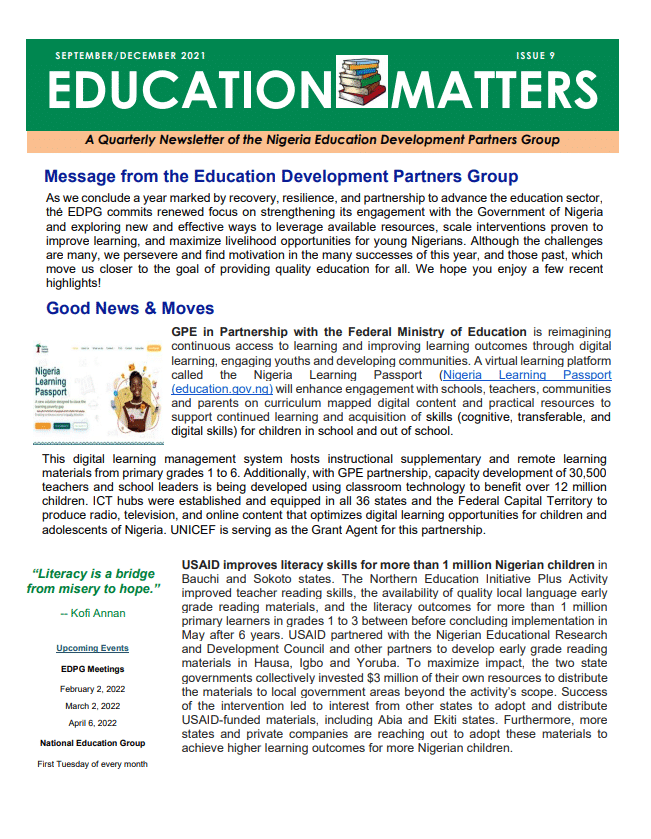
FME Newsletter: Education Matters Issue 9 September/December 2021
24 September, 2026
Report on Key Achievements Federal Scholarship Board (FSB) 2015-2022
24 September, 2026
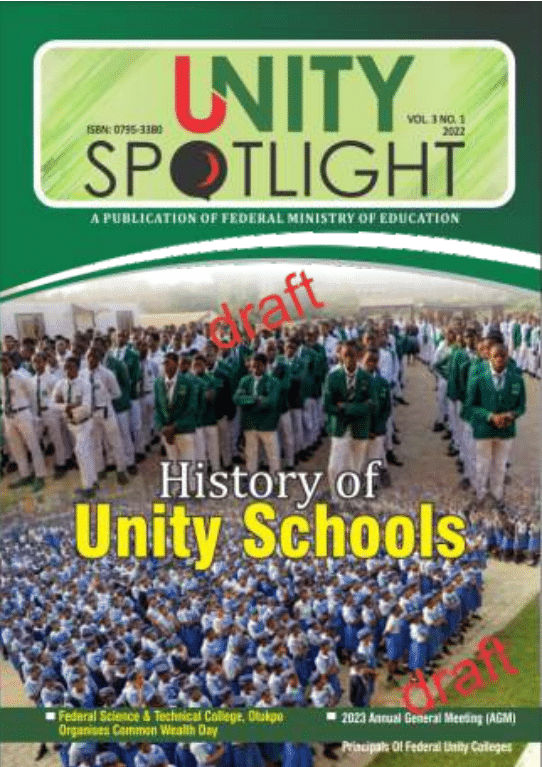
Unity Spotlight: History of Unity Schools 2022
24 September, 2026
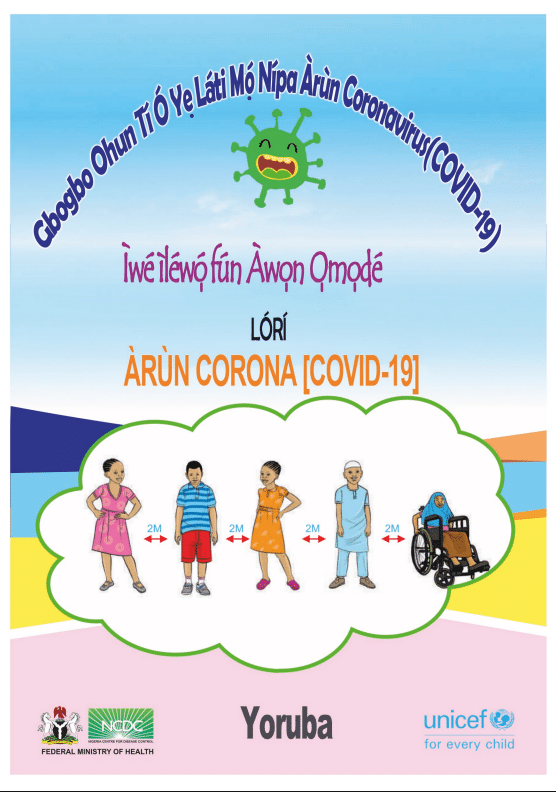
Gbogbo Ohun ti Ó ye Láti Mó Nipa Arun Coronavirus (COVID-19) Iwé iléwó fun Awọn Qmode
23 September, 2026
A Handbook for Children on Corona Virus Disease (Covid-19)
23 September, 2026
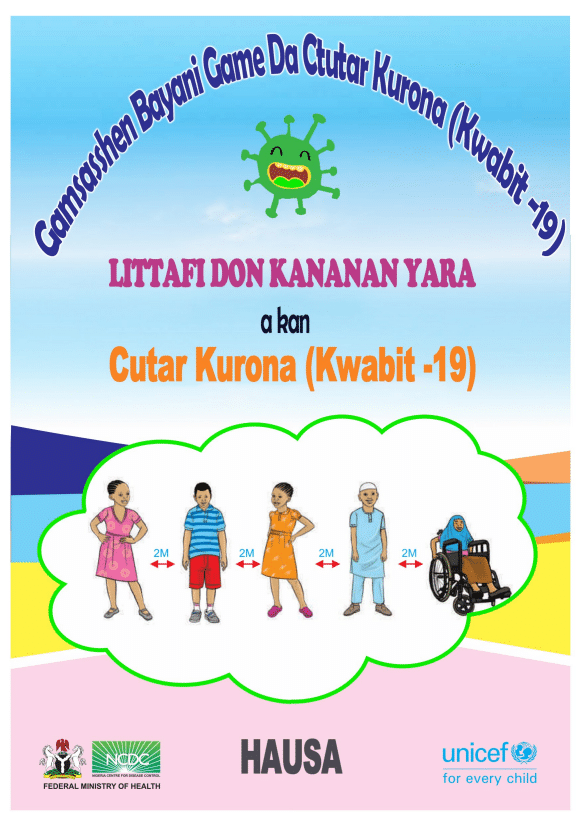
Gamsasshen Bayani Game Da Ctutar Kurona (Kwabit -19): Littafi Don Kananan Yara a kan Cutar Kurona (Kwabit -19)
23 September, 2026
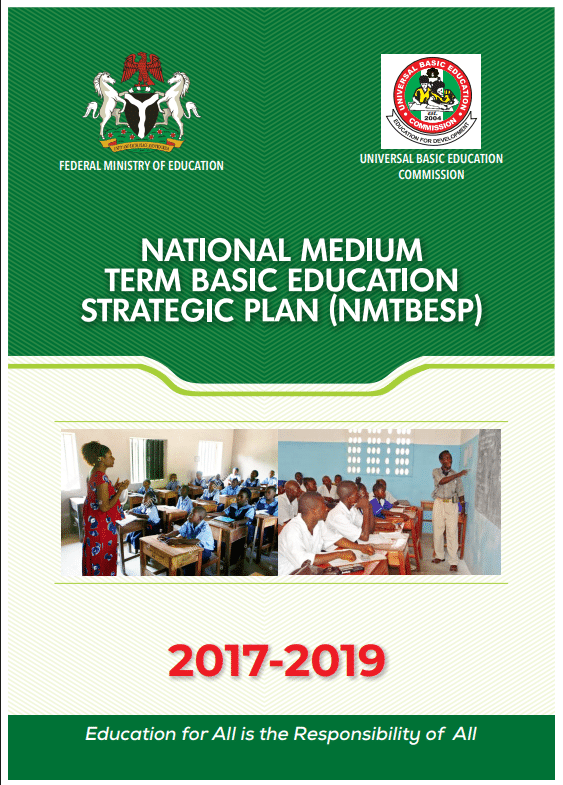
National Medium Term Basic Education Strategic Plan (NMTBESP) 2017-2019
23 September, 2026
Summary of National Council on Education Major Decisions Volume IV (2000 - 2006)
23 September, 2026
Summary of National Council on Eduction Major Decisions Volume V (2007 - 2013)
23 September, 2026
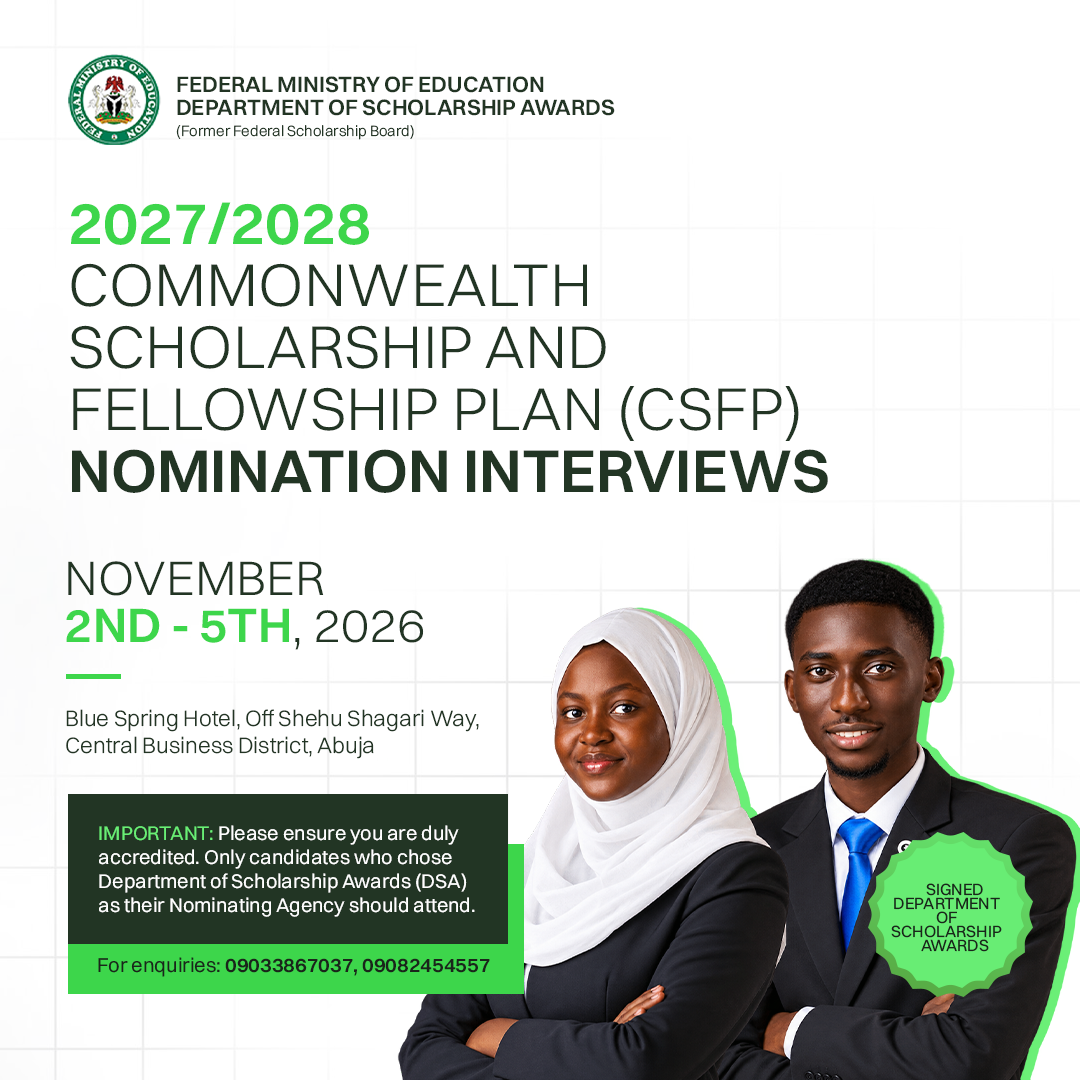
2027/2028 Commonwealth Scholarship and Fellowship Plan (CSFP) nomination interview from 2nd to 5th November, 2026
The Honorable Minister of Education, Dr. Maruf Olatunji Alausa, invites all candidates who had succe...
29 October, 2026
FG reaffirms commitment to girl-child education, safety and empowerment.
The Federal Government has reaffirmed its commitment to protecting the rights of the girl child, eli...
20 October, 2026
FG reforms agricultural education with 80% practical training to boost food security, youth employment.
The Federal Government has unveiled 39 reviewed and newly developed agricultural curricula and 31 Na...
20 October, 2026
Renewed Hope sustained: Alausa hails JAMB listing of Armed Forces College of Medicine and Health Sciences (AFCOM-HS) as 100 pioneer cadets prepare for admission.
Dr Maruf Tunji Alausa, CON , HME has welcomed the listing of the Armed Forces College of Medicine an...
20 October, 2026
FG clarifies: Recruitment waiver process for federal tertiary institutions remains in force.
The Federal Ministry of Education wishes to clarify that the recruitment waiver process for Federal ...
19 October, 2026
Alausa hails Aliko Dangote Foundation’s plan to empower four million students with IPO shares.
The Honourable Minister of Education, Dr. Maruf Tunji Alausa, CON, has commended Alhaji Aliko Dangot...
19 October, 2026
FG Harmonizes 2027 Examination Timetable, Targets August Results Release
The Federal Government has intensified efforts to harmonise the 2027 external examination timetable,...
14 October, 2026
FG Expands Monitoring Committee To Ensure Full Implementation Of Union Agreements , Sustain Industrial Harmony
The Federal Government has expanded the Implementation Monitoring Committee (IMC) to ensure the effe...
14 October, 2026
Promises Kept, Hope Restored, Trust Built: FG Unveils Tertiary Education Agreements, Commences Allowance Payments
The Federal Government has reaffirmed its commitment to transforming Nigeria’s tertiary education se...
13 October, 2026